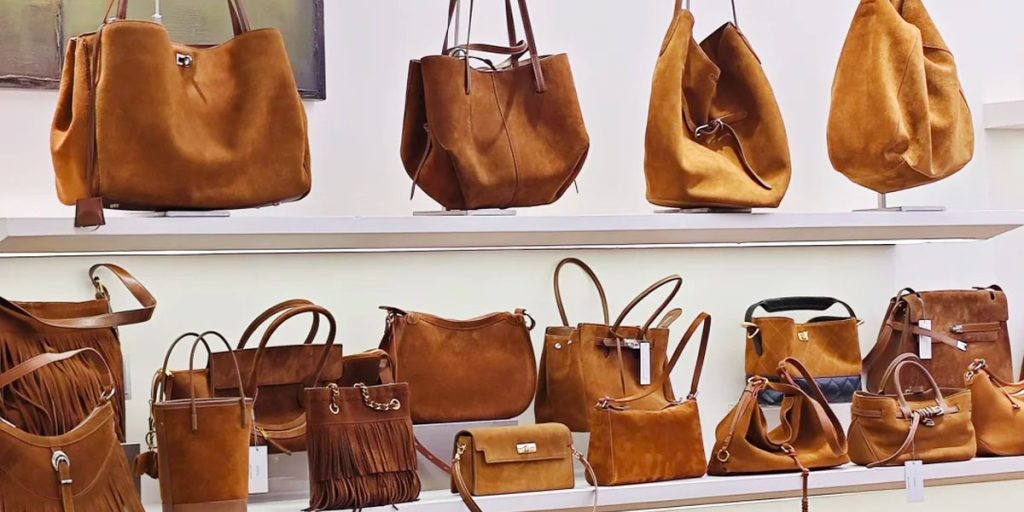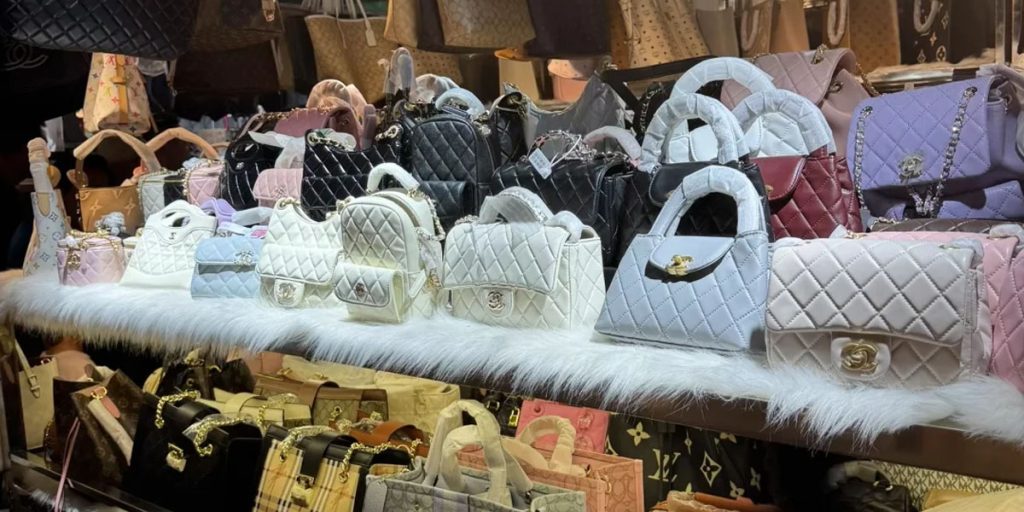
China is the world’s largest bag manufacturer, accounting for nearly 40% of global production, with exports reaching numerous countries and regions. In 2025, the global luggage and leather goods market surpassed $170 billion, while the Chinese market exceeded ¥200 billion ($28 billion), representing over 30% of the global share. Bag demand in China is projected to grow by 2.3% year-over-year in 2026, with the market size increasing by 6%. Meanwhile, cross-border e-commerce platforms continue to accelerate their global expansion, as businesses actively tap into emerging markets through platforms like Alibaba International Station and Temu.
Navigating such a massive industrial chain, whether you’re a brick-and-mortar store owner, an e-commerce entrepreneur, or a cross-border seller, choosing the right wholesale channel directly determines your profit margins and competitive edge. This article provides a comprehensive overview of China’s most prominent bag wholesale markets and online platforms for 2026.
I. A Quick Overview of China’s Five Core Bag Wholesale Markets
Before diving into each regional market, here’s a snapshot of China’s five most noteworthy bag wholesale market clusters:
| Market Name | City | Core Positioning | Ideal For |
|---|---|---|---|
| Guangzhou Guihua Gang-Sanyuanli Leather Goods District | Guangzhou | Mid-to-high-end finished women’s bags, genuine leather bags | Boutique owners, brand buyers, e-commerce sellers |
| Guangzhou Shiling (International) Leather & Leather Goods City | Guangzhou | Full leather goods industry chain / raw materials | Direct factory sourcing, large-volume buyers |
| Yiwu International Trade City (District 2) | Yiwu | Small commodities / affordable bags / foreign trade | Cross-border sellers, small commodity wholesalers |
| Hebei Baigou Hedao International Luggage Trading Center | Baoding | Affordable bags / full categories / e-commerce supply chain | Pinduoduo/Taobao sellers, community group buying |
| Zhejiang Pinghu Luggage City | Jiaxing | Bag manufacturing industrial cluster | Foreign trade orders, bulk purchasing |
II. South China: Guangzhou — The Heart of the Global Leather Goods and Bag Industry
Guangzhou is home to the nation’s largest and highest-volume mid-to-high-end bag market cluster. From raw materials to finished products, and from high-end customization to affordable overstock, a complete industrial ecosystem has taken shape. The 2025 Guangzhou International Leather Goods & Bags Sourcing Festival alone attracted buyers from over 40 countries and regions.
1. Guihua Gang — Ziyuan Gang — Sanyuanli: The Golden Triangle for Mid-to-High-End Women’s Bags
This is China’s largest mid-to-high-end bag market cluster, centered around Ziyuan Gang and supplemented by Guihua Gang, comprising dozens of markets that form a large-scale commercial district offering both wholesale and retail options. The three adjacent commercial areas each have distinct product positioning:
- Guihua Gang Leather Goods Market: Positioned as mid-to-high-end, it is one of the largest and most upscale bag wholesale markets in the country. Many Taobao and private e-commerce sellers source goods here, where pricing is relatively transparent. Ordinary PU bags cost around ¥300 ($42), while top-layer cowhide styles start at over ¥800 ($112).
- Sanyuanli Leather Goods City: Primarily features mid-to-high-end replica bags with fine craftsmanship and diverse styles.
- Shisanhang Commercial District: Floors 4 and above of the New China Building host a large concentration of boutique women’s apparel overstock, mainly Korean and European/American styles, with prices ranging from ¥100 to ¥300 ($14–$42). However, it’s worth noting that most bags at Shisanhang stalls are sourced from Guihua Gang; for original sourcing, it’s advisable to go directly to Guihua Gang.
2. Shiling (International) Leather & Leather Goods City: A Hub for Source Factories
Located in Huadu District, Guangzhou, Shiling is celebrated as the “Leather Goods Capital of China.” It hosts over 8,800 leather goods enterprises, produces more than 700 million bags annually, and generates annual transaction volumes exceeding ¥500 billion ($70 billion). Shiling (International) Leather & Leather Goods City is among the key professional markets designated for national cultivation by the China Leather Industry Association and is recommended as one of Guangdong’s five leading specialized markets.
Shiling’s core advantage lies in being a “source.” It offers not only wholesale finished products but also the entire industrial chain—leather goods, raw leather materials, auxiliary materials, and accessories. Over half a million buyers visit Shiling each year seeking opportunities, and its influence extends globally. For brand owners pursuing first-hand sourcing and batch customization, Shiling is an indispensable strategic procurement destination.Here, a one-stop bag manufacturing specialist like Momocolor is an ideal choice for buyers.
III. East China: Yiwu — The Bag Sector in the “Small Commodities Capital”
1. Yiwu International Trade City District 2: One-Stop Small Commodity Sourcing
Yiwu International Trade City covers over 4.3 million square meters, houses 70,000 booths, and sees an average daily foot traffic exceeding 200,000 visitors. Bag wholesale is concentrated primarily in District 2 (which also hosts hardware, electronics, and watches), with some bag-related categories also present in Districts 3 and 4.
Yiwu bags are characterized by low minimum order quantities, a wide variety of styles, and affordable pricing—making them particularly well-suited for cross-border e-commerce sellers and community group-buying entrepreneurs. The market maintains trade relations with 212 countries and regions, with annual exports surpassing $30 billion.
2. Yiwugo (www.yiwugo.com): The Official Online Platform of the International Trade City
As the official online platform of Yiwu International Trade City, Yiwugo covers over 95% of merchants within the market. It supports product searches, online ordering, and dropshipping with no minimum order quantity requirements. For entrepreneurs unable to visit Yiwu in person, this is an effective channel for lowering sourcing barriers.
IV. North China: Hebei Baigou — “China’s Bag Capital”
Hebei Baigou is one of China’s largest bag production and wholesale hubs, widely known as “China’s Bag Capital.” The Hedao International Luggage Trading Center is Baigou’s core wholesale market, complemented by a mature e-commerce supply chain and logistics system where dropshipping models are extremely prevalent. Additionally, Baigou operates local direct-from-factory e-commerce platforms such as Wanhutong, which has partnered with over 200 contracted factories, further streamlining online wholesale channels.
V. Other Regional Bag Manufacturing Clusters
Beyond the three major core regions mentioned above, several other distinctive bag manufacturing clusters in China deserve attention:
- Zhejiang Pinghu Luggage City: Renowned for foreign trade exports and brand OEM manufacturing.
- Hebei Xinji Leather City: Specializes in fur and leather bag products.
- Jiangsu Yangzhou: Focuses on specific categories such as tool bags and travel luggage.
VI. Online Wholesale Platforms: The New Ecosystem of Digital Sourcing
1. 1688.com (Alibaba Group) — China’s Largest B2B Wholesale Platform
1688.com covers all categories including apparel, bags and shoes, home goods, and electronics. It is China’s largest B2B wholesale platform, supporting dropshipping and one-click listing to Taobao and Pinduoduo. The platform also features an “Industrial Belt Zone” covering 26 major industrial clusters, including Yiwu Small Commodities and Baoding Baigou Luggage. For bag buyers, it’s recommended to prioritize merchants with a “Source Factory” label, a long-standing TrustPass membership, and high transaction volumes.
2. Bao66 — A Vertical Wholesale Platform Specializing in Bags
Bao66 (www.bao66.cn) is a vertical platform focused on bag sourcing. Relying on the two major production bases of Hebei Baigou and Guangdong Shiling, it offers features such as online product selection, online ordering, and merchant store navigation. The app supports one-click sharing to third-party online sales channels like WeChat, QQ, and Pinduoduo, making it highly suitable for Taobao sellers, Pinduoduo merchants, and private e-commerce entrepreneurs.
3. Other Vertical Platforms
Platforms like Vvic.com, 17huoyuan.com, and Yiwugo each have unique strengths, focusing on different scenarios such as apparel and bag coordination, one-click Taobao listing, and one-stop small commodity sourcing.
VII. 2026 Sourcing Trends and Cautionary Tips
Three Major Trends
- Customization Demand Surges: In 2026, China’s business luggage and bag customization wholesale market is projected to exceed ¥12.8 billion ($1.8 billion), with a compound annual growth rate of 11.2%. Demand for batch customization is rising, with orders of 1,000 units or more accounting for 58% of the total.
- Eco-Friendly Materials Become a Necessity: 65% of buyers now list eco-friendly materials as a key consideration, and procurement demand for GRS-certified fabrics has grown by 45% year-over-year.
- Cross-Border E-Commerce Accelerates Overseas Expansion: Enterprises are using platforms like Alibaba International Station and Temu to tap into emerging markets, with exports to the Middle East and Latin America showing the fastest growth rates.
Sourcing Pitfalls to Avoid
- Custom Orders: 38% of corporate buyers report issues with craftsmanship defects, and 27% have experienced delivery delays. It’s advisable to prioritize suppliers with ISO 9001 certification who offer free sampling services.
- Sourcing from the Source: Prices in industrial belts like Guangzhou Huadu Shiling and Hebei Baigou are typically 15–30% lower than secondary or tertiary wholesale markets. However, factory minimum order quantities (MOQs) tend to be higher; select the appropriate channel based on your own capacity to manage inventory.
- Online Selection: Always verify merchant credentials and transaction history to avoid being misled by overly polished product images. For first-time collaborations, start with a small trial order and consider an in-person factory inspection before scaling up the order volume.
- Overstock Treasure Hunting: Overstock markets like Guangzhou Shijing and Jindong offer substantial quantities of de-labeled branded goods and factory surplus, with prices as low as 20–30% of the original retail price. This is ideal for livestream selling and community group buying, but it requires meticulous inspection of stitching, hardware, and other details.
In 2026, China’s bag wholesale market operates with a dual-engine strategy: offline industrial belts combined with online digitalization. Whether you are a physical store owner, an e-commerce entrepreneur, or a cross-border seller, identifying the right channel for your specific needs is more critical than simply having access to many channels. Newcomers are advised to start small with online trial orders, gain experience, and then progressively move into bulk purchasing directly from industrial belts. A steady and measured approach will take you further in the long run.