A few years ago, I was sitting in a tiny coffee shop in Berlin with a friend who had just launched her first handbag line. She was frustrated. Her European manufacturer was too slow, her margins were paper-thin, and the minimum order quantities were bleeding her dry. “Where do all these fast-growing DTC bag brands actually make their stuff?” she asked. I pulled out my phone and showed her a map of a place she’d never heard of: Shiling Town, Huadu District, Guangzhou, China. Fast forward 18 months, and she had tripled her product range, cut production costs by 58%, and was getting samples delivered in less than a week. The secret was Shiling—China’s undisputed empire of leather goods.
If you’re building a women’s handbag brand, selling on Etsy, scaling a Shopify store, or designing the next must-have tote for your boutique, you need to understand why Shiling is not just another sourcing option—it’s probably the most undervalued one available to Western entrepreneurs right now. Think of this post as your insider’s version of why Shiling wins, written in the way I’d explain it over a beer with a fellow founder. No fluff, no factory-alibaba-generic-speak. Just the real reasons, some numbers, and plenty of practical advice.
The Town That Bags Built
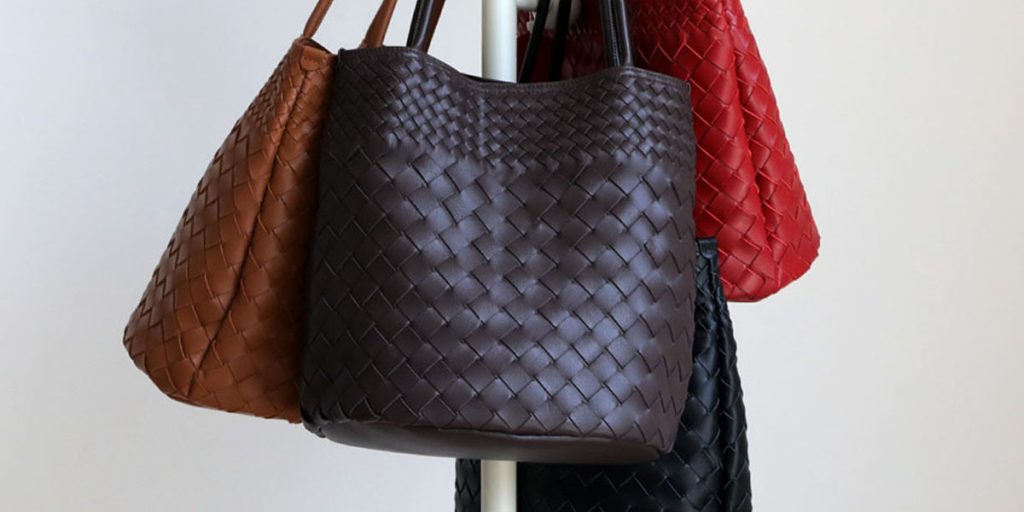
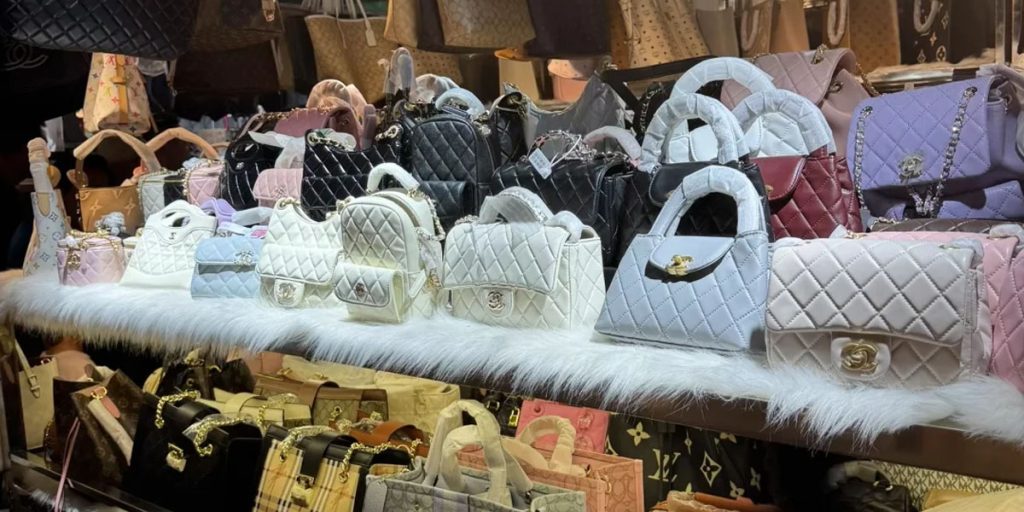
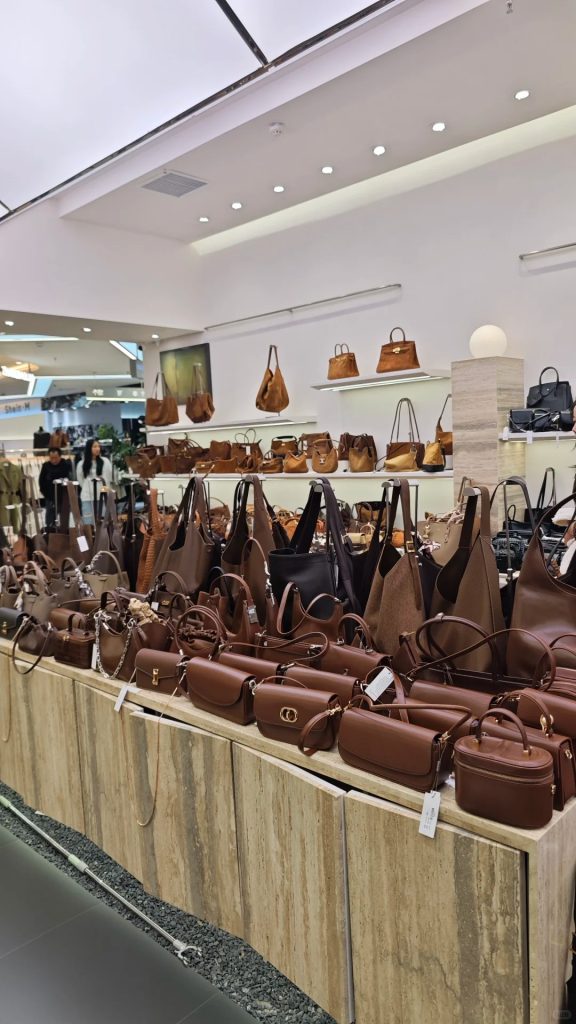
Let’s start with scale, because once you see it, you can’t unsee it. Shiling isn’t a cluster of a few dozen workshops. It’s a town of over 300,000 people whose entire economy is built around one thing: making bags. Walk through the Shiling Leather Goods Center, and you’ll quickly grasp that this isn’t a market—it’s a vertical universe. You’ll pass shops selling nothing but zippers in 15,000 variations, shops dedicated exclusively to carbon-fiber pattern PU, shops that only do laser-cut logos, and factory showrooms where three generations of a family have been stitching handbag linings. The town produces an estimated 500 million to 800 million bags and accessories per year. When someone tells you that a leather handbag you bought in Paris was “Made in China,” there’s a very high probability it was born right here.
For a Western brand, this density translates into something magical: you don’t just find *a* supplier; you find an entire ecosystem that can solve any design, material, or hardware challenge within a three-mile radius. It’s Silicon Valley for soft goods, except the innovation is in leather finishing, edge painting, and bag construction.
The Price Myth: Cheap vs. Value
Let me kill a stereotype early. Sourcing from Shiling doesn’t mean buying cheap junk. It means gaining access to a supply chain where the cost structure is fundamentally different—and far leaner—than anything you’ll find in Europe, North America, or even other parts of China.
A small batch of premium PU crossbody bags with custom hardware and lining might cost you $18–$22 all-in from a mid-tier Shiling factory. That same bag, made in Italy or Portugal, would easily run €45–€65 ex-works. And the Shiling version will use hardware sourced from the same few mega-suppliers that feed global luxury brands. The difference isn’t quality of craftsmanship; it’s labor cost, material aggregation, and the breathtaking speed at which materials flow through the town’s supply network.
Because materials, components, and labor are all within bicycle distance, factories don’t need to stockpile inventory the way a standalone European atelier does. They buy leather at 8 a.m., cut it by 10, stitch it by 2 p.m., and ship a sample to your hotel by dinner. That velocity slashes working capital costs, and those savings land in your pocket. For a DTC brand aiming for a 4x–6x markup, Shiling sourcing can single-handedly turn a side hustle into a financially sustainable business.
Customization That Moves at Startup Speed
One thing I love about the Shiling mindset: factories here are incredibly comfortable with customization. This is not a “pick from our catalog and swap the logo” situation unless you want it to be. Most workshops execute OEM and ODM daily, and they’re shockingly fast at turning a sketch or a reference photo into a physical sample.
I’ve seen factories produce a fully lined vegan leather tote sample with bespoke hardware within 72 hours of receiving the design files. For a Western brand accustomed to 3–6 week sample lead times, this speed is a competitive weapon. It means you can test new shapes on Instagram, iterate after feedback from a pop-up market, and place a replenishment order before your competitor has even received their first prototype from a local studio.
However, you must deliver extremely clear tech packs. The better your specs—stitching type, thread thickness, edge paint color code, lining weight, hardware finish—the closer the first sample will be. Shiling factories reward precision. They don’t work well with “just make it look like this luxury bag” mentalities if you haven’t defined the details. Bring drawings, measurements, and a physical reference sample if you can. That’s how you unlock their superpower.
The MOQ Reality Check (It’s Better Than You Think)
If you’ve ever tried to source from Italy or even some Shenzhen electronics markets, you’ve probably been quoted minimum order quantities of 500 or 1,000 units per color. That can be a dealbreaker for a fledgling brand. Shiling has a large number of small-to-medium workshops that genuinely accept orders as low as 50–100 pieces per style, sometimes even fewer if you’re prototyping and willing to pay a small surcharge.
Why? Competition. Thousands of workshops vie for business, and many have learned that today’s tiny brand can become tomorrow’s order volume monster. They want the relationship. So if you’re launching a Kickstarter, pre-selling to your email list, or test-driving a new silhouette, Shiling is one of the few global hubs where you won’t be laughed out of the room for asking about low MOQs.
A real tip: go slightly above the absolute minimum to build goodwill. If they say 50, commit to 80 and ask for a compromise on the unit price. You’ll get better attention, and when you need an urgent re-order, they’ll pick up the phone at midnight.
One-Stop Magic: Materials, Hardware, Packaging
Another massively underestimated advantage is that Shiling allows you to consolidate almost your entire supply chain within walking distance. You can select your main leather from one stall, your custom zipper pulls from a hardware specialist two doors down, and your dust bags and boxes from a packaging supplier around the corner. Your factory can source them all, but if you’ve personally chosen the exact trim, you’ll achieve a level of design coherence that feels custom-luxe rather than white-label generic.
For European and American consumers, packaging matters enormously for unboxing experiences and Instagram shares. Being able to specify the texture of your logo foil stamp, the thickness of tissue paper, and the stitching on dust bags—all without having to deal with five different suppliers in five different countries—is a logistical dream. Shiling essentially compresses twelve supply chain phone calls into a single afternoon of walking through wholesale halls.
How to Source Smartly from Shiling: Non-Obvious Advice
Now, if you’re thinking of hopping on a plane (or doing this remotely with a sourcing agent), here’s what I’ve learned the hard way—the “知乎” style of straight-to-the-point wisdom that Western buyers often miss.
- Stop searching for “handbag factory Shiling” on Google. The best workshops don’t have slick websites. They operate through referrals, WeChat, and the physical Leather City showrooms. Use platforms like 1688.com to identify potential factories, but always verify them through video calls, third-party inspection, or—ideally—boots on the ground. If you can’t visit, hire a local English-speaking sourcing agent who works exclusively on a fixed fee, not a commission based on the order value. This removes the incentive for them to push you toward the highest-margin factory.
- Ask for a “pre-production sample” before the bulk run. This is the single most important quality control step most first-timers skip. The sample department might create a perfect bag, but the production line might make subtle changes if you haven’t signed off on a pre-production sample made from the actual bulk materials with the actual production jigs. Pay for two samples: an initial proto and a PP sample. It costs you maybe $150 extra and saves thousands in rejected inventory.
- Beware of “material substitution” promises. Some factories will show you a gorgeous Italian-imported leather swatch, then quote you a price that makes no sense. Insist on knowing the exact provenance and composition of every major material. Tell them explicitly that you will test random pieces from the bulk shipment. Shiling’s honest factories will welcome this; the ones that push back are the ones you walk away from.
- Communicate in simple, numbered sentences. Forget long paragraphs or abstract design language. “1. Strap drop: exactly 23 cm. 2. Lining: beige microfiber suede, 0.8 mm thickness. 3. Magnetic snap: nickel-free, matte gold.” This minimizes translation errors and becomes a checklist both sides can audit.
- Visit during the Canton Fair if possible. Shiling is only about 30 minutes from the Pazhou Complex in Guangzhou by car. Many factory owners attend Phase 3 of the Canton Fair (fashion, bags, shoes). Meeting them at the fair first gives you a lower-pressure environment to assess their English level, professionalism, and product range before you commit to visiting their workshop.
Is Shiling Right for Your Brand?
Shiling sourcing is not an automatic fit for everyone. If your brand’s entire identity is “Made in Italy” and your customers pay a premium for that label, then no, Shiling will not replace that heritage story. But if your brand is built on design originality, accessible luxury, sustainability through well-made durable goods, or simply delivering insane value at a $120–$280 retail price point, Shiling should be on your radar. I’ve seen small brands grow from 300 bags to 30,000 bags a year by combining Shiling manufacturing with sharp Western branding. The artisans are there, the materials are there, and the pricing model is friendlier than almost anywhere else on Earth.
The real question isn’t “Why source from Shiling?” It’s “How fast can you learn to manage the sourcing process so you can access this advantage before your competitors do?”